E-Bike Commuter Buying Checklist: What to Verify Before You Click Buy
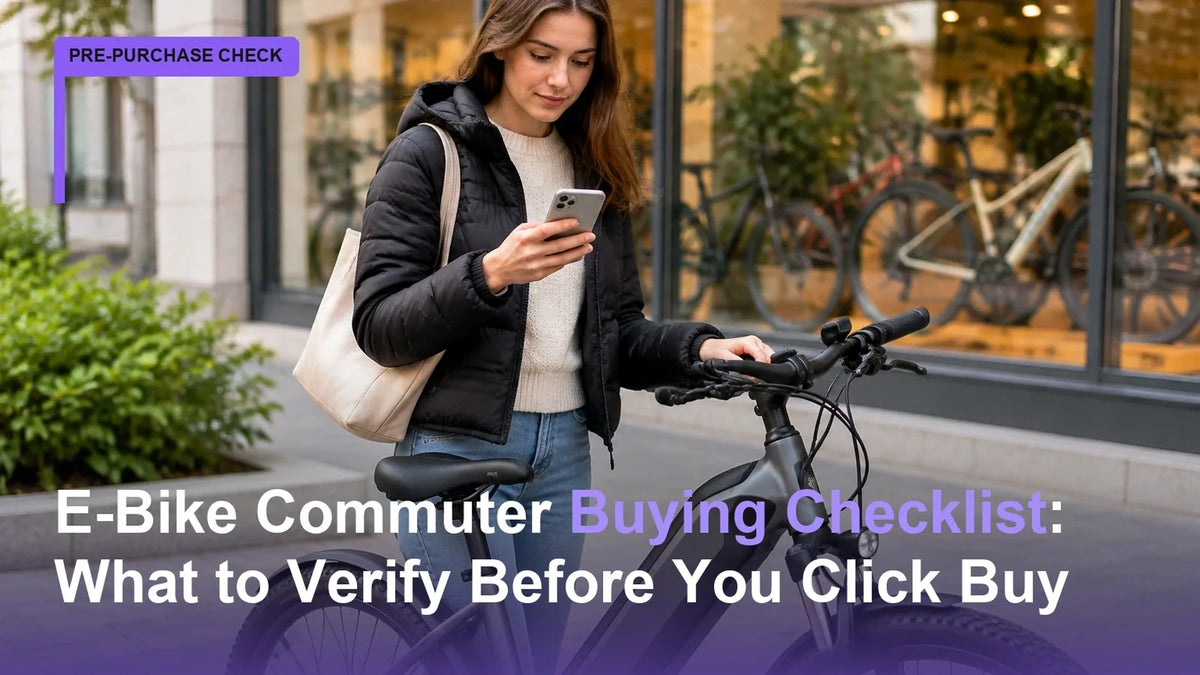
You have read the reviews, compared the spec sheets, and narrowed your shortlist to one or two bikes. Your finger is hovering over the checkout button.
Stop for five minutes and run through this page first.
This is not a full buying guide—if you are starting from scratch, read How to Choose an E-Bike for Your Daily Commute. Think of this instead as your pre-flight sheet. It catches the blind spots that turn an exciting delivery day into a Monday morning headache: the stairwell turn the frame cannot clear, the office rack that rejects a wide tire, or the return policy that requires the cardboard box you just recycled.
Print this page, screenshot it, or keep it open on your phone at checkout. If a box stays unchecked, get the answer before you pay.
1. Fit and Riding Comfort
A bike that feels awkward at mile three will stay parked by month two. Verify these six points against the sizing chart:
- Rider height range: Checked my height and inseam against the brand's sizing table for this exact model.
- Step-over clearance: Frame style (step-through or high-step) lets me mount easily in work clothes, even with a loaded rear rack.
- Saddle height window: Minimum and maximum saddle height give full leg extension without maxing out the seatpost.
- Handlebar posture: Reach and stem height match the upright or forward-leaning posture I want for my ride duration.
- Shared-rider adjustability: If a partner or roommate will share the bike, the seatpost clamp and stem adjust without tools.
- Borderline-size check: If I sit between frame sizes—or near the limit of a one-size folder—I confirmed fit with support or a test ride.
Why it matters: Cockpit fit decides whether your knees, wrists, and back tolerate riding five days a week. See How to Choose an E-Bike for Your Daily Commute and our folding vs. full-size commuter guide for sizing details.
2. Storage, Lifting, and Parking Reality
Storage failure is the fastest way a commuter e-bike stops getting used. Measure both ends of your route before ordering:
- Home footprint: Measured my home storage spot (closet, hallway, garage, or bike room) against the bike's full length and handlebar width.
- Folded dimensions: If buying a folder, verified the published folded length, width, and height against my closet or car trunk.
- Staircase lift weight: If my routine includes stairs, checked the listed weight and confirmed whether removing the battery makes the lift manageable.
- Workplace lock-up: Know where the bike will sit during work hours (indoor cage, office corner, or street rack).
- Building rules: Checked whether my apartment lease, HOA, or office building restricts e-bikes or indoor battery storage.
- Transit rules: If using a train or bus, read my transit agency's written policy on folding bikes, wheel sizes, and peak hours.
Why it matters: Discovering your building bans hallway parking—or that the frame is too heavy for your walk-up—after delivery leaves you stuck. Compare frame footprints in our folding vs. full-size e-bike comparison.
3. Range and Daily Charging
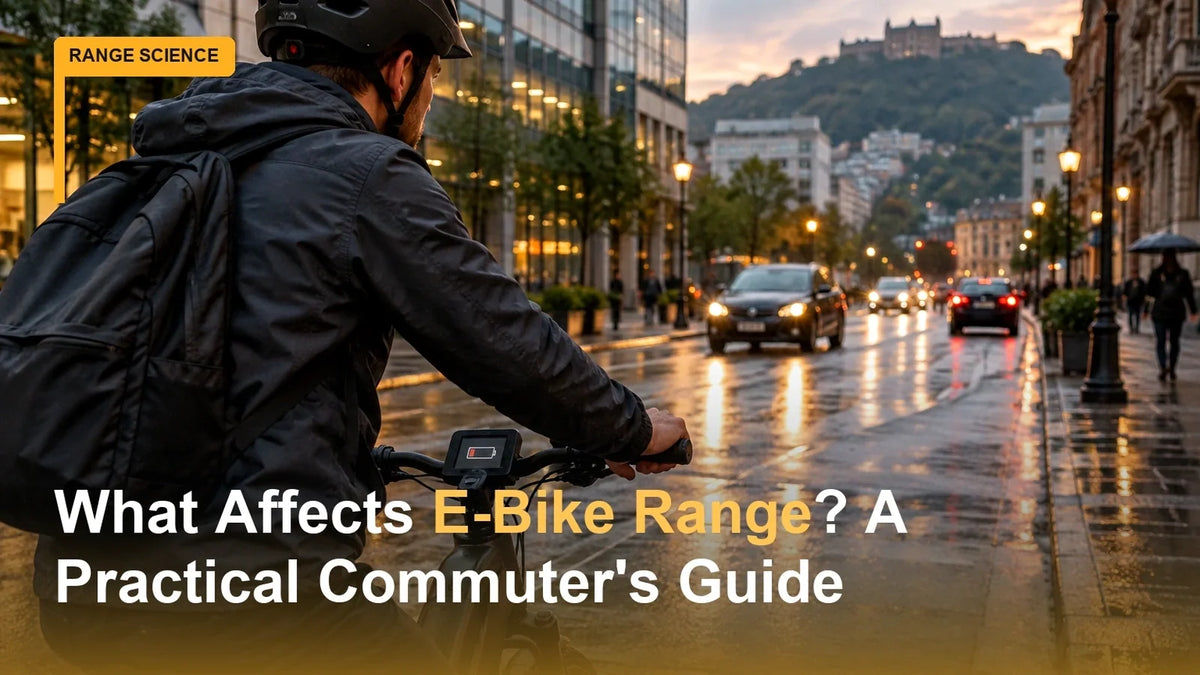
Never plan your daily ride around the "up to X miles" banner on a product page. Verify the battery math instead:
- True round-trip distance: Mapped the actual bike-lane route I will ride—including hills and detours—and doubled it.
- Safety buffer: Added a 20–30% buffer on top of my round trip for headwinds, detours, and gradual battery aging.
-
Watt-hour capacity (
V × Ah): Multiplied volts by amp-hours to compare true energy capacity in watt-hours (Wh). - Conservative range check: Realistic range (accounting for hills, assist level, and tire drag) covers my buffered round trip on one charge.
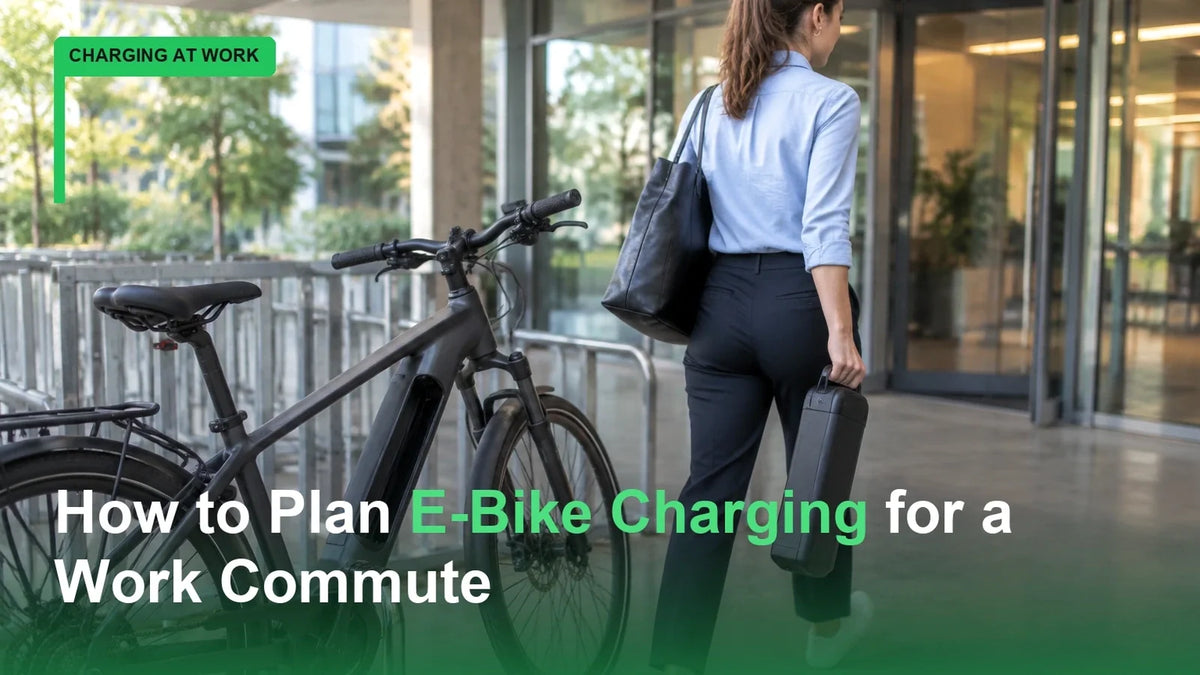
- Home outlet access: Confirmed where I will plug the charger in overnight.
- Removable battery check: If I cannot park the frame near an outlet, verified the battery unlocks and lifts out for indoor charging.
- Winter margin: If commuting in cold weather, accounted for winter capacity drop and have a warm indoor spot to store and charge the pack.
Why it matters: Range anxiety disappears when your watt-hours cover your worst winter day with bars to spare. Run your numbers with our commute e-bike range worksheet and check seasonal battery care in Winter Care & Riding Tips for Electric Bikes.
4. Motor, Gearing, and Legal Class
Match the drivetrain to your steepest hill and your local bike-path rules:
- Motor layout: Know whether the bike uses a hub motor (simple, low-maintenance for flat to rolling routes) or a mid-drive motor (uses the bike's gears on steep climbs).
- Hill-climbing match: Checked motor rating and gearing against the steepest climb on my ride home.
- Class confirmation: Know whether the bike operates as Class 1 (pedal-assist to 20 mph), Class 2 (throttle + assist to 20 mph), or Class 3 (assist up to 28 mph).
- Route legality: Confirmed that this class and throttle setup are allowed on my route's bike lanes and multi-use paths.
- Usable gearing: Gear range lets me pedal comfortably at cruising speed without spinning out.
Why it matters: A fast bike barred from your protected greenway is slower than a path-legal commuter. Read Understanding the Core Components of an Electric Bike for a drivetrain breakdown.
5. Tires, Brakes, and Commuter Hardware
Your tires and brakes are the only parts touching the street or stopping the weight:
- Exact tire size: Checked wheel diameter and tire width in inches on the spec sheet.
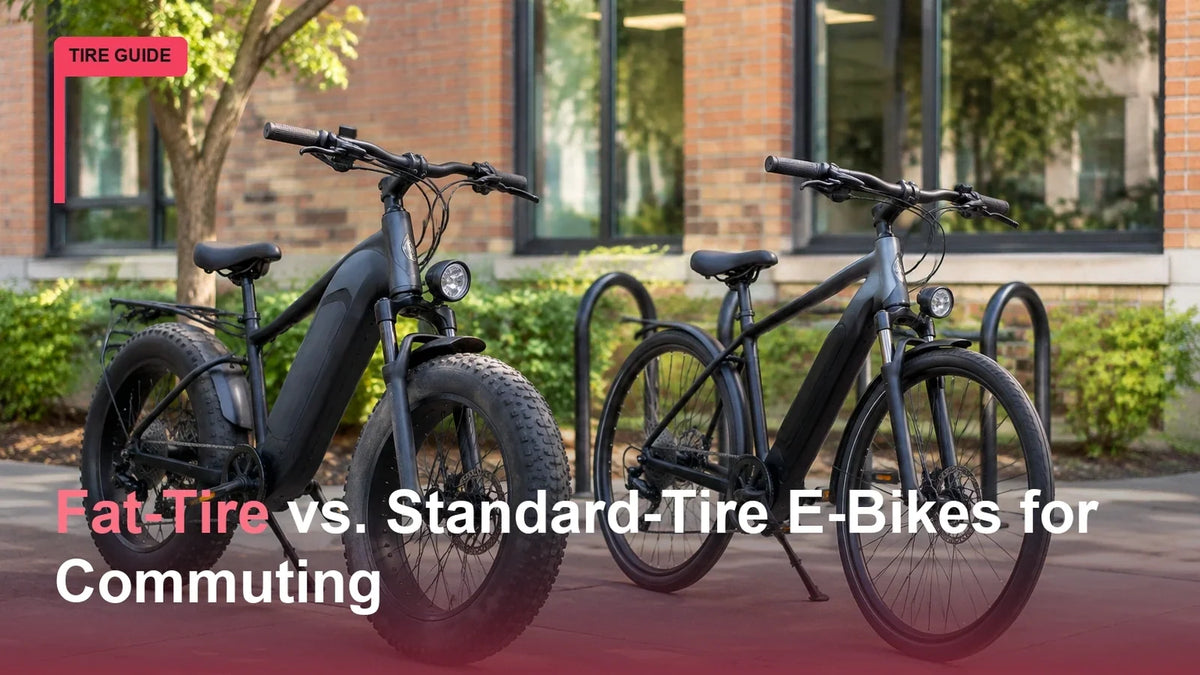
- Road-surface match: Matched standard commuter tires to smooth pavement efficiency, or wide/fat tires (3.0"–4.0") to potholes, gravel, and extra cushioning.
- Bike rack fit: Confirmed the tire width fits into the wheel slots, wall hooks, or bus racks I use.
- Brake type: Matched mechanical or hydraulic disc brakes to my riding weight, hills, and wet-weather needs.
- Included commuter gear: Checked whether fenders, a rear rack, a kickstand, and wired LED lights come in the box or must be added to my cart.
Why it matters: A 4.0-inch fat tire that will not slot into your office bike rack is an avoidable day-one surprise. See our fat-tire vs. standard-tire e-bike commuting guide for the full trade-off.
6. Safety, Security, and Local Laws
Lock down your personal protection and theft defense before the bike arrives:
- State and city rules: Checked my state DOT/DMV rules (or PeopleForBikes' state law directory) for helmet, age, and path rules.
- Certified helmet: Have a properly fitted cycling helmet ready before ride one.
- Visibility: Bike has front and rear lights plus reflectors, and I have reflective outer gear for dark commutes.
- Real lock: Budgeted for a heavy-duty U-lock or hardened chain (never a thin cable lock).
- Charging safety: Will use only the manufacturer-supplied charger and follow federal battery guidance from the CPSC Micromobility Information Center.
- Insurance check: Checked whether my renters or homeowners policy covers e-bike theft or priced standalone coverage.
Why it matters: Good protective gear and a real lock keep you safe and keep the bike yours. Read How to Use an E-Bike Safely: Tips, Common Concerns, and How to Choose Protective Gear.
7. Warranty, Returns, and Parts Support
Read the fine print before entering your payment details:
- Written warranty: Read the official warranty terms for the frame, motor, and battery.
- Return policy: Know the return window in days, whether test-ride mileage is allowed, who pays return shipping, and whether I must keep the original box.
- Spare parts access: Replacement batteries, chargers, brake pads, and inner tubes in my wheel size are available to order.
- Local shop service: Know a local bike shop willing to service the mechanical parts (brakes, tires, chain), or handle basic upkeep myself.
- Support contact: Verified customer service channels and shipping terms on the official website.
(Buying from UrlifeBike? Verify current warranty, shipping, and return policies directly on the official UrlifeBike website before ordering.)
8. Total Checkout Cost Check
Budget for the complete setup, not just the bare bike:
- Essential accessories: Budgeted for a helmet, U-lock, spare inner tube, floor pump with gauge, and rack or panniers.
- Annual upkeep buffer: Set aside a small yearly budget for brake pads, tires, and chain care.
- Final checkout total: Reviewed shipping fees, sales tax, and delivery options on the checkout screen.
Final 60-Second Pre-Click Pass
Right before you click Place Order, confirm all five:
- Fits my height, stairs, home storage spot, and work bike rack.
-
Battery watt-hours (
V × Ah) cover my real round-trip distance plus a 20–30% buffer. - E-bike class is legal on the exact streets and paths I ride.
- Read the written warranty and return policy on the seller's official site.
- Helmet and U-lock will be in hand before my first ride.
Bonus: Arrival-Day Box Checklist
Save this list for delivery day:
- Photograph any outer carton damage before opening, and keep the box and foam until you finish your first test ride.
- Follow the assembly manual, checking stem bolts, pedals (left pedal threads counter-clockwise), axle nuts, and clamps.
- Inflate both tires to the PSI stamped on the sidewall using a pressure gauge.
- Charge the battery to 100% indoors with the supplied charger.
- Test both brakes and every assist level on a quiet street before commuting in traffic.
- Record the frame serial number, save your receipt, and register your warranty.
All checked? You are ready to buy with confidence. Browse the UrlifeBike electric bike collection to compare commuter-ready folding, compact fat-tire, and full-size urban e-bikes.